Green Bin Tips
Why We Use the Green Bin – and How to Do It Right
McNair Park participates in Metro Vancouver’s Green Bin Food Scraps Recycling Program. This program helps keep food out of the landfill and turns it into compost and biofuel. By using the green bin properly, we reduce garbage, cut greenhouse gas emissions, and create valuable resources for our community.
Why Use the Green Bin?
Food isn’t garbage – over 30% of landfill waste is food that could have been composted.
When food rots in a landfill, it produces methane, a powerful greenhouse gas.
Composting food scraps saves landfill space and supports local gardens and farms.
It also helps reduce waste collection costs for our building over time.
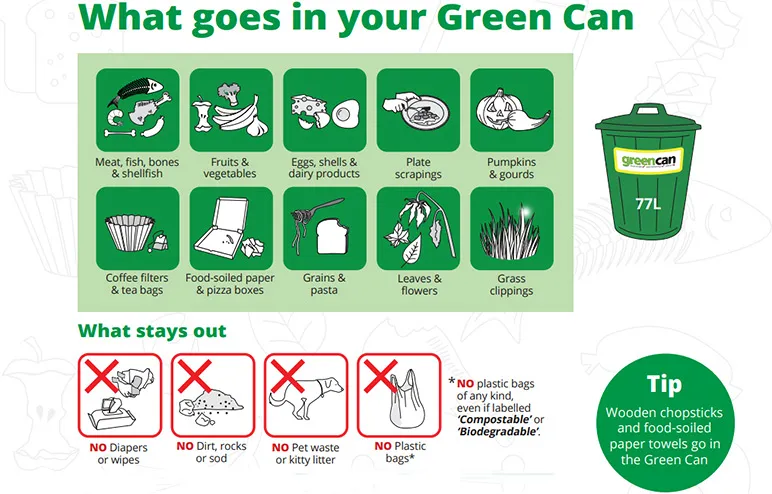
What CAN Go in the Green Bin
✅ All food – raw or cooked:
Fruit & vegetables
Meat, fish, poultry, bones
Dairy, cheese, eggshells
Bread, pasta, rice, leftovers
Coffee grounds & filters, tea bags
✅ Food-soiled paper:
Napkins, paper towels
Pizza boxes
Paper bags
✅ Yard waste
Leaves, grass clippings, flowers
What CANNOT Go in the Green Bin
❌ No plastic of any kind – even “biodegradable” or “compostable” bags
❌ No cups, cartons, or containers
❌ No rubber bands, twist ties, or bread clips
❌ No pet waste, litter, or diapers
❌ No glass, metal, or Styrofoam
👉 Tip: If you want to line your kitchen bin, use newspaper or paper bags – not plastic.
Tips to Keep Odours and Pests Down
Line it: Place newspaper, cardboard, or dried yard trimmings at the bottom of the bin.
Layer it: Alternate food scraps with newspaper or yard waste to absorb moisture.
Wrap it: Wrap meat or fish scraps in newspaper before tossing them.
By following these guidelines, we can keep our green bin clean, odour-free, and effective. Thank you for helping make our community greener and more sustainable!
Attached files